The act of being prepared for a disruptive event spreads across all social-economical levels regardless of political or religious affiliations, gender or sexual preferences, wealth, or philosophical bent. It stands to reason to take a step back and analyze what
type of prepper you are based on the strategy you employ and the resources you can put into preparedness. I strongly believe that by analyzing your individual preference and strategy regarding prepping you can tweak and adjust your progress in preparedness on a yearly, monthly, even daily basis.
Psychology and Philosophy
I've already posted an article discussing the anxiety-driven inspiration of prepping and, though that's not a 100% negative reason to prepare for a disruptive event most of us are driven by other factors in addition to anxiety. I invite the reader to take a step back and list the reasons, beyond "I don't want to die", as to why you prepare for an event.
Many preppers prepare out of a sense of obligation toward their friends and family, for instance. They feel the need to play the sheep-dog and ensure the safety and well-being not only for themselves, but those they love. I've also chatted with preppers who prepare because they believe doing so empowers them as an 'alpha member' of society, providing an advantage over other citizens who fail to prepare for such inevitable disruptive events.
Religious drive can be dropped into this category as well. Several Christian denominations and sects take the words found in the book of Revelation to heart, heeding the interpretation as God commanding them to prepare for the coming end of days. I'd heard a few years back that the Church of Latter Day Saints (commonly referred to as Mormons) required their members to have a 2-year supply of food, water, and medical supplies, though since then I've heard-tell that's been reduced to just a 6 month supply by church direction.
Resources and Strategy
Those of us 'into' preparedness all have a strategy; a method that best suits our philosophy and ideals to give us what we believe to be the best advantage during a disruption. Below are examples of this ideal.
The Homesteader
This individual typically scorns material wealth and instead chooses to live 100% off-grid, growing their own food, powering their home with wind and solar energies, and learning to scavenge resources such as old cars or 'junk' others discard and turning these items into highly useful objects. Homesteaders learn to live off the land in a far more dependent fashion, seeing modern materialism as being fragile and easily broken. As a result they limit their dependence on modern goods and services, or eliminate them from their lives altogether.
Homesteaders tend to prep for disruptive events such as social or economical collapse, an EMP event, or even an asteroid strike or super volcano eruption. The homesteader sets themselves up for when there's no longer a grid to connect to and when society must revert back to dependency and living off of the land.
Generally speaking the homesteading strategy is a poor-man's choice (this is not a bad thing). With only a little startup revenue a prepper can dip their toes into homesteading with a little land and a lot of know-how. It's the know-how that's critical to a homestead prepper, far more-so than money which would be rendered useless in a SHTF event by their take. It's also this know-how and knowledge of homesteading that many peppers new to the strategy seriously underestimate, and they pay for it, too. City folks moving out to the rural environment without knowledge of living off the land or sheltering themselves properly find themselves in a world of hurt long before the disruption they're preparing for actually occurs.
The Urbanite (and Suburbanite)
It's seriously underestimated the number of people who want or need to prepare for a disruption who also live in, or on the outskirts of, a major city. Most seasoned preppers will tell you in a serious grid-down situation, cities become death traps with hoards of looters running the streets, resources slim, and martial law restricting every element of life. However, for countless Americans living in a city is inevitable or unavoidable. For these citizens the strategy becomes one of mitigation and incremental improvements for if/when a disruption occurs. Cleverness becomes key. Strategies on storing food and water in limited locations, acquiring firearms and other forms of self defense, and plans to escape the city limits (or draw farther away from them), all factor in to the preparedness method for urbanites. Obscurity and heightened self awareness also become critical in this strategy.
Urbanites really need to prep for anything and everything since the city will attract or be prone to it all. Social and financial events will hit the cities hard. Earthquakes and hurricanes in certain parts of the country are very real threats, and EMP/CME events will hit cities and urbanites within them the hardest. It's no wonder "avoid cities at all costs" is parroted among preppers all the time. Urbanites must account for all levels of disasters in their strategies and have a multifaceted approach to bugging in and bugging out scenarios.
Wealth and material resources become more crucial for the urbanite as cities, themselves, tend to be financial centers of trade and commerce. Having the financial means to live in a sufficiently large apartment, for instance, or being able to afford a storage container near-by their home will leverage an urbanites position in accumulating and storing preps. Being able to upgrade from a 2 bedroom to a 3 bedroom will grant just that much more storage space...at a cost. Transportation costs also tend to be very high in and around cities (most New Yorkers rely only on public transportation because of this), so even getting around or bugging out can prove financially challenging as well. All that said, Urbanite preppers don't need to be mega wealthy. As usual, preparedness is a long-term, even permanently on-going goal, and urbanites critically need to push towards this goal within the limits of their budgets.
The Wealthy
And then there are the wealthy. Having solid financial footing to the point you have the income to toss into prepping without care is a dream most preppers share. If you have the money, any strategy can be implemented and that strategy typically includes insulating the wealth itself. Practices such as diversifying investments, buying gold and silver, and storing wealth resources in creative locations (literally burying cash in the back yard) all become part of the plan, all in addition to using a percentage of that wealth to prepare for whatever disaster keeps the person up at night.
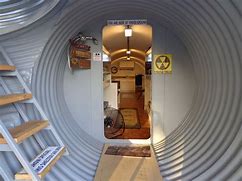
Bunkers, extensive bug-out vehicles, 3-month supplies of freeze-dried food, and enough firearms to supply a 3rd-world country are all within the realm of possibility for people with the cash. The age-old idea of "just toss money at it" becomes the go-to answer to disruptive potentials. Wealth preppers are often criticized, however, as the toys and gadgets they buy to prepare for disruption can often break or wear out. Trucks can break down or be destroyed, ammo spent, fancy clothes tear, and so on.
Being a wealthy prepper is the stuff of fantasy. Even if you're preparing for an economic collapse (and the loss of most of your wealth), buying a crap ton of preps now, storing them all away safely, and diversifying the remainder is a decent strategy.
Final Thoughts
Of course these are just broad-scope categories and many people into preparedness bridge across one or more of them. Then there are the casual preppers who center their preps around simple disruptions like short term weather events or the like, and who may not go to such extremes as any of these three categories. In my humble opinion the homesteader takes the award as the Most Sustainable strategy. The Wealthy is the most fun-if-fantasy strategy. Lets face it; most of us are simply not going to win the lottery or inherit the millions of dollars to set us apart in this fashion. Then there's the urbanites, and suffice it to say I'd wager that most preppers fall somewhere along this particular strategic spectrum...not quite homesteading, and not super-comfortably wealthy. These preppers are forced to balance a check book each time they make a major supply purchase, but don't necessarily have the land or knowledge to live off-grid 100%.
Your prepping strategy boils down to your philosophy (why you're prepping) and the resources you have to initiate the best plan based on your philosophy. Money, although the root of all evil, is absolutely required to move forward with a plan. We're not in a barter system quite yet, so a core foundational budget is crucial to success, even if you're planning on homesteading, an urbanite, or if you're a casual prepper. A good prepping plan starts with a philosophy and continues with a solid budget. Build from there.
Peace.